

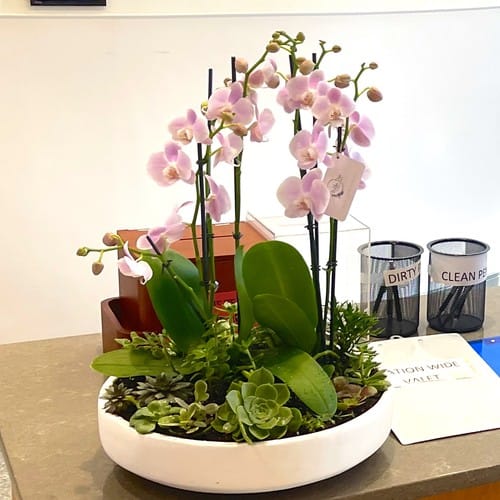
The most important orchid care tips are simpler than you think, and the biggest mistake people make is doing too much. You got an orchid. Maybe someone sent it to you. Maybe you bought it on impulse at the store and now it’s sitting on your counter looking gorgeous and slightly intimidating. The good news: orchids are tougher than their reputation suggests. The bad news: most of the advice you’ve heard is probably wrong.
Here’s how to actually keep an orchid alive and thriving, from people who work with them every day.
Orchid Care Tips: The Number One Rule: Don’t Overwater
More orchids die from overwatering than from any other cause. It’s not even close. The instinct to water frequently comes from a good place, but orchid roots are designed to dry out between waterings. They’re epiphytes in the wild: they grow on tree branches, not in soggy soil.
For a Phalaenopsis orchid (the most common type: the one with the big, flat blooms on an arching stem), water once every 7-10 days. When you water, do it thoroughly: take the whole pot to the sink, run room-temperature water through it for 15-20 seconds, and then let it drain completely. Never let the pot sit in standing water.
The easiest way to check if it needs water: stick your finger an inch into the potting mix. If it feels dry, water. If it feels damp, wait.
Light: Bright but Indirect
Orchids want bright, indirect light. An east-facing window is ideal, morning sun is gentle enough. A south-facing window works too, but you may need a sheer curtain to filter the intense afternoon light. Direct hot sun will scorch the leaves, turning them yellow or brown.
If your orchid’s leaves are dark green, it’s probably not getting enough light. Healthy Phalaenopsis leaves should be a medium olive green, bright enough to show the plant is photosynthesizing well.
Temperature and Humidity
If you’re comfortable in your home, your orchid probably is too. They do well in typical indoor temperatures between 65-80°F. The one thing they don’t love is sudden temperature swings, keep them away from drafty windows in winter and air conditioning vents in summer.
Humidity helps, especially in winter when indoor air gets dry. You can set the pot on a tray of pebbles with water (making sure the pot isn’t sitting in the water), or group your orchids with other plants. They create a little microclimate together.
After the Blooms Fall Off
This is where most people panic. The flowers drop, the stem turns brown, and you assume the plant is dead. It’s not. It’s resting.
Once all the blooms have fallen, you have two choices. You can cut the stem back to just above a visible node (a small bump on the stem) and hope for a secondary bloom spike, this sometimes works with Phalaenopsis. Or you can cut the stem all the way down to the base and let the plant put its energy into growing new leaves and roots, which sets it up for a stronger bloom cycle next time.
Either way, keep watering and caring for it the same way. A healthy orchid will rebloom in a few months: sometimes sooner, sometimes later. Patience is part of the deal.
Repotting
Orchids should be repotted every one to two years, or when the potting medium starts to break down and retain too much water. Use orchid-specific bark mix: not regular potting soil, which holds too much moisture and will suffocate the roots.
When you repot, you might find some roots that are dry and papery. Trim those away with clean scissors. The green and silvery-white roots are the healthy ones.
Orchids at Hidden Door
We carry orchid arrangements in our Orchids & Succulents collection: including Phalaenopsis orchids in elegant pots, ready to gift or keep for yourself. They’re one of our most popular items for corporate settings, home décor, and gifts that last far longer than cut flowers.
If you’re looking for a gift that keeps giving for months, an orchid is hard to beat. Browse our collection, our Golden Orchid and Heavenly Orchids are two favorites, or check delivery options across the Triangle.