

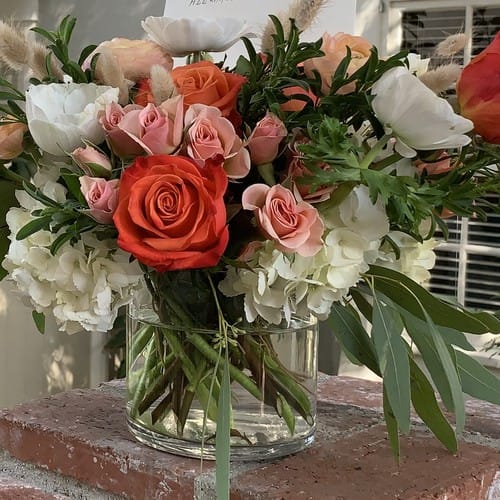
The wedding flower trends for 2026 are all about movement, texture, and seasonal authenticity. If you’re getting married in the Triangle this year, you’re planning your wedding during one of the most interesting moments in floral design. The trends have shifted: and honestly, they’ve shifted in a direction we love. Less rigid, more personal, and far more creative than the Pinterest-perfect arrangements that dominated weddings for the last decade.
Here’s what we’re seeing from brides and couples in Raleigh, Durham, Chapel Hill, and beyond.
Wedding Flower Trends 2026: Movement Over Perfection
The tightly packed, perfectly round bridal bouquet isn’t gone, but it’s no longer the default. More couples are choosing arrangements with visible movement: trailing vines, asymmetrical shapes, stems that breathe a little. The look is less “formal arrangement” and more “gathered from a beautiful garden five minutes ago.”
This works especially well at Triangle venues with outdoor spaces: think The Umstead, The Bradford, or any of the gorgeous barn venues in the area. The flowers become part of the landscape instead of competing with it.
Tone-on-Tone Color
Monochromatic palettes are having a major moment. Instead of mixing five different colors, couples are layering shades within one color family: all pinks from blush to dusty rose, or all creams from ivory to champagne. The result feels incredibly sophisticated and photographs beautifully.
We’ve done all-white weddings that looked almost architectural, and soft peach palettes that felt like a sunset made of flowers. The trick is using enough variety in texture and bloom type to keep it interesting: garden roses next to ranunculus next to lisianthus, all in the same color family but each bringing something different.
Sculptural Installations
Ceremony arches and installations have gotten more creative. Instead of the standard floral arch, we’re seeing asymmetrical designs: flowers cascading down one side, or a floating cloud of blooms above the altar. Some couples are skipping the arch entirely and doing a statement piece behind the head table instead.
The move toward sculptural design reflects a bigger shift: couples want their wedding to feel like their wedding, not a template. And flowers are one of the most powerful ways to make that happen.
Sustainable and Seasonal Choices
More Triangle couples are asking about locally grown flowers, seasonal availability, and what’s actually in bloom during their wedding month. We love this conversation. Working with what’s naturally available, rather than flying in out-of-season imports, often produces more beautiful results because the flowers are at their peak.
North Carolina has a strong network of local flower farms, and the Triangle’s climate gives us a fantastic growing season from April through October. Spring weddings get peonies, ranunculus, and tulips. Summer brings dahlias, zinnias, and sunflowers. Fall weddings have access to some of the richest textures and colors of the year.
The “Unplugged” Aesthetic
A growing number of couples are asking for arrangements that feel unstructured and romantic, the kind of flowers you might find at an Italian villa or a French country house. Less polish, more soul. This works beautifully with garden roses, clematis, jasmine vine, and textural greens like olive branches or eucalyptus.
It’s not messy. It’s intentional. And when it’s done well, it looks effortless, which is the hardest thing in the world to pull off.
Planning Your Wedding Flowers
If you’re getting married in the Triangle and want to talk about flowers, we’d love to hear from you. We do weddings and events of all sizes and styles, and every design starts with a conversation about what matters to you, not a catalog of pre-made options.
Browse our collection for everyday arrangements, or fill out the consultation form on our Weddings & Events page to start the conversation.